
Amberlea Church

Christian Worship, Contemporary Music, Groups for Kids, Youth, Adults

Member of the Presbyterian Church in Canada
1820 Whites Rd, Pickering, Ontario, L1V 1R8
905-839-1383
Church Office: Tue & Thu 9:00 a.m. to 12:00 p.m.
Worship: SUN 11:00 a.m.

  • home
  • Mona's Blog
  • Missions
  • Giving
  • Find Us
  • What we do
    • About Us
    • sermons
    • Family Ministries
    • Leading With Care
    • Community Groups
    • Volunteers
    • Private
    • RightNowMedia
  • Families
    • F.A.C.E.
    • Shelly's Blog
    • KidZone
  • Contacts

Four little statements that can change everything!

October 15, 2026 by Rev. Mona Scrivens

It is so good to be home!

Over the past few months, I’ve had the incredible gift of stepping away for my Inter-Mission — a time of rest and renewal that the Presbyterian Church in Canada encourages ministers to take every five years.

And what a gift it has been!

There was time to rest, pray, read, travel, take in the beauty of God’s creation, and simply slow down. I had precious time with family, including cuddles with my two new grandsons and plenty of playtime with my three-year-old granddaughter. (Let’s just say that keeping up with a three-year-old is a ministry all on its own!)

When people ask me, “So, how was your Inter-Mission?” my answer is pretty simple:

It was exactly what my soul needed.

One of the things I discovered during this season is that gratitude often grows in quiet places. When life slows down, we begin to notice the gifts we might otherwise rush right past — a beautiful sunrise, a meaningful conversation, a meal shared with friends, or even a baby needing a diaper change. Yes, even that can be a gift!

And as I returned to our church family on Thanksgiving Sunday, I was reminded of just how thankful I am for all of you. Thank you for your prayers, encouragement, and the grace you extended as I took this time away. Your messages meant more than you probably realized.

As I reflected on gratitude, I was reminded that thankfulness isn't just about counting our blessings; it's also about becoming a blessing to others.

So, here's a thought: What if we paid a little more attention to the words we speak to the people we love?

In James 3, we're reminded that our tongues may be small, but our words have enormous power. They can encourage and heal, or they can hurt and create distance.

Have you ever replayed a conversation on the drive home and thought, “Why did I say that?” Or, even worse, “Why did I say THAT out loud?”

I suspect I'm not the only one!

In my Thanksgiving message, I shared four simple phrases that have the potential to change our relationships.

1. “I love you.”

Let's say it more often! We sometimes assume people know we love them, but there is something powerful about actually hearing those words. Let's be generous with our love and make sure the people who matter to us know it.

2. “I'm sorry.”

This one can be a little harder. We all like to be right! But sometimes we need to ask ourselves: Would I rather win the argument or work toward restoring the relationship?

A sincere apology can open the door to healing. It's about valuing the relationship more than proving a point.

3. “I'm praying for you.”

Over the past few months, so many of you let me know you were praying for me. Those words mattered more than you probably realized.

Prayer reminds us that we don't have to carry life's burdens alone. And here's a little challenge: when you tell someone you're praying for them, take a moment and actually pray!

4. “Please forgive me.”

We all need God's grace, and we all need to learn to extend grace to one another.

While travelling in BC, I saw a hiker carrying an enormous backpack. It looked exhausting, and I couldn't help thinking how much that backpack reminded me of unforgiveness. Sometimes we carry old hurts for far longer than we need to.

Forgiveness doesn't mean pretending the hurt never happened or removing healthy boundaries. But it can be the beginning of putting that heavy backpack down.

Jesus reminds us not to keep score when it comes to forgiveness. We are all imperfect people who need grace.

A little challenge for the week ahead

As I settle back into the rhythms of everyday life, I’m carrying a renewed sense of gratitude — for my time away, for my family, for God's faithfulness, and for the privilege of being part of this church family.

So, here's my challenge for all of us this week:

  • Say “I love you” a little more freely.

  • Say “I'm sorry” a little more quickly.

  • Say “I'm praying for you” — and then actually pray!

  • Say “Please forgive me” when you need to, and be willing to extend forgiveness to others.

Four simple phrases. Nothing complicated. Just small, faithful steps that can make a remarkable difference.

Imagine what our homes, friendships, and church community might look like if we put these words into practice.

I am so grateful to be home, refreshed and renewed, and excited for what God has ahead for us.

May we not only count our blessings, but become a blessing to the people God has placed in our lives.

With gratitude and love.
October 15, 2026 /Rev. Mona Scrivens

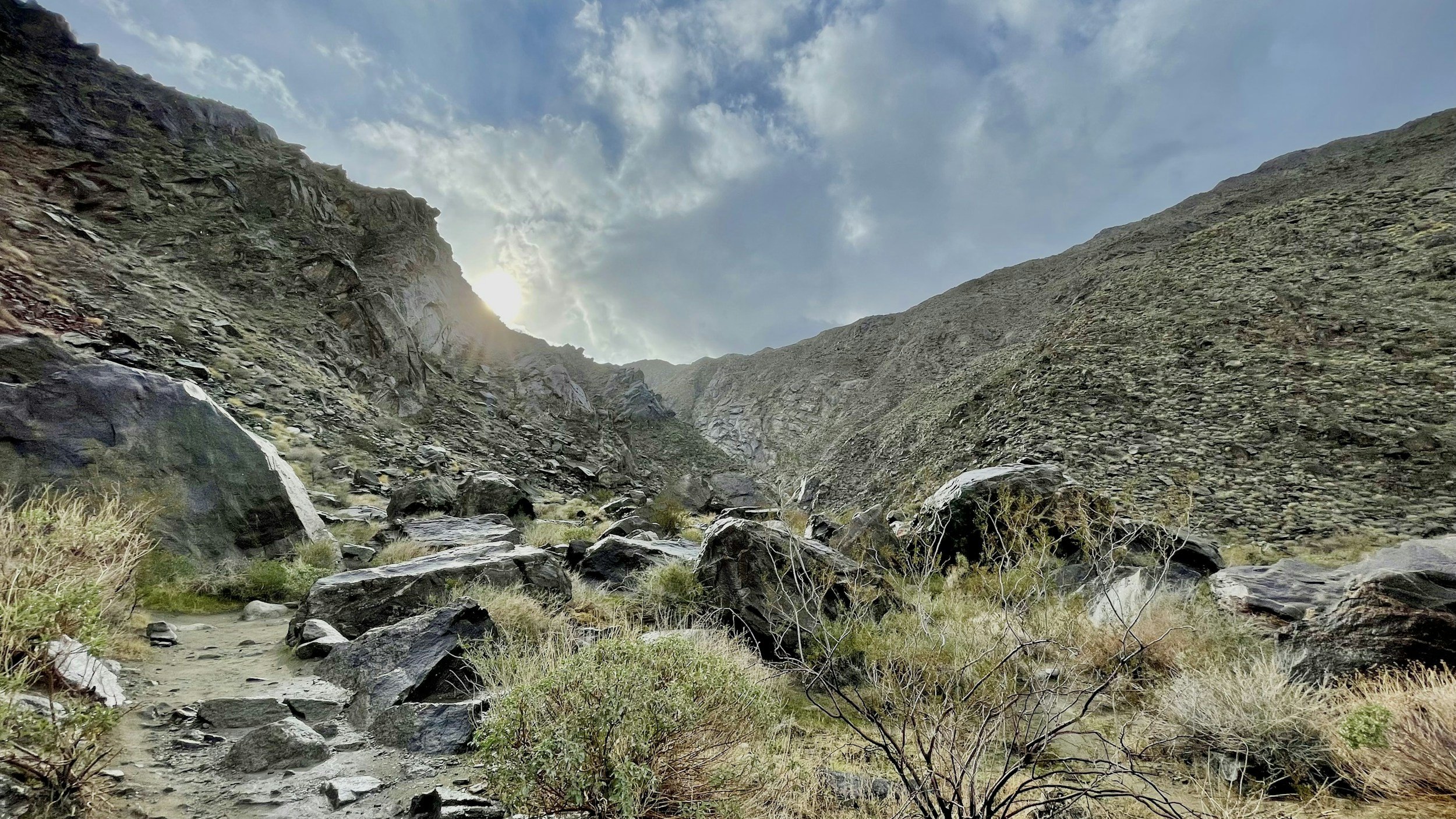
Trusting God in the Valley

June 24, 2026 by Rev. Mona Scrivens

There is something about the valleys of life that reveals what we truly believe.

Most of us would gladly choose the mountaintop —seasons when prayers are answered quickly, faith feels effortless, and God's presence seems unmistakably close. But as Habakkuk, the Old Testament prophet, discovered… the deepest work God does in our lives often happens in the valleys.

Habakkuk began his journey with questions. He looked at the circumstances around him and struggled to understand what God was doing. The answers he received were not the answers he wanted. Yet by the end of his story, something remarkable had changed. His circumstances had not improved, but his faith had deepened.

In Chapter Three, Habakkuk teaches us three powerful lessons for navigating difficult seasons.

First, remember what God has done. When life feels uncertain, we look back and recall God's faithfulness. We remember the prayers God has answered, the doors God has opened, the comfort God has provided, and the ways God has carried us through seasons we never thought we would survive. Remembering strengthens our faith for today.

Second, accept what God is doing. Acceptance is not approval. It does not mean we like our circumstances or fully understand them. It simply means acknowledging that God is still God, even when life unfolds differently than we hoped.

Third, trust what God is going to do. Habakkuk declared, "Though the fig tree does not bud... yet I will rejoice in the Lord." That is mature faith—not faith that depends on favourable circumstances, but faith that rests in the unchanging character of God.

One of my favourite insights from this book is this: I have walked with Jesus through enough yesterdays to trust Him with all of my tomorrows.

Perhaps you find yourself in a valley today. If so, take heart. The valley is not evidence that God has abandoned you. It may be the very place where God is strengthening your faith, deepening your trust, and teaching you to worship even before the answers come.

As we enter the summer months, I want to share that I will soon be beginning my Inter-Mission, and this will be my last new blog until Thanksgiving weekend.

An Inter-Mission is an intentional season of renewal, prayer, study, reflection, and rest. I am grateful for this opportunity and look forward to all that God will teach me during this time.

My prayer for you is that you, too, will embrace the gift of rest this summer. Slow down when you can. Spend time in God's presence. Walk, pray, read, reflect, and allow Him to renew your spirit. Whether you find yourself on a mountaintop or in a valley, remember that God is faithful.

May we each return in the fall refreshed, renewed, and ready for the next season of ministry and life together.

Until then, may the peace of Christ guard your hearts and minds, and may you know the joy of trusting Him with all your tomorrows. Blessings.

June 24, 2026 /Rev. Mona Scrivens

When you're in the valley

June 17, 2026 by Rev. Mona Scrivens

Most of us love the mountaintop seasons of faith.

Those moments when God feels close, prayers seem to be answered, and life unfolds with a sense of purpose and joy. But sooner or later, every believer discovers that faith is not lived only on the mountaintops. Sometimes we find ourselves in the valley.

A prayer goes unanswered. A door closes unexpectedly. A relationship becomes difficult. A dream seems delayed. And we begin asking the same questions the prophet Habakkuk asked centuries ago: "God, where are You? What are You doing?"

The beauty of Habakkuk is that he reminds us that God is not intimidated by our questions. In fact, faith is often deepened not when we have all the answers, but when we continue to cling to God while wrestling with our doubts.

Habakkuk teaches us three simple but powerful practices for valley seasons:

Listen.
Instead of rushing ahead or filling the silence with our own worries, we stop and listen. God is still speaking through His Word, His Spirit, His people, and often through circumstances we don't yet understand.

Write.
When God gives encouragement, direction, or a promise, write it down. Those moments become anchors for our souls when the storms of life threaten to make us forget what God has already said.

Wait.
Perhaps the hardest spiritual discipline of all. Yet God's delays are not God's denials. Throughout Scripture, God's people often waited longer than they expected, but never longer than God intended. His timing is always perfect.

In the valley, we are tempted to focus on what we cannot see. Habakkuk calls us to something different: to live by faith. Not faith in our circumstances, but faith in the character of God.

And when questions remain unanswered and the road ahead is unclear, there are three words worth holding onto:

But the Lord.

The Lord is still good.
The Lord is still faithful.
The Lord is still on His throne.

Whatever valley you may be walking through today, don't give up. Keep listening. Keep trusting. Keep waiting. The God who met Habakkuk in his questions is the same God who walks with us in ours.

"But the Lord is in His holy temple; let all the earth be silent before Him." (Habakkuk 2:20)

And sometimes, that is exactly the reminder our hearts need.

June 17, 2026 /Rev. Mona Scrivens
  • Newer
  • Older